

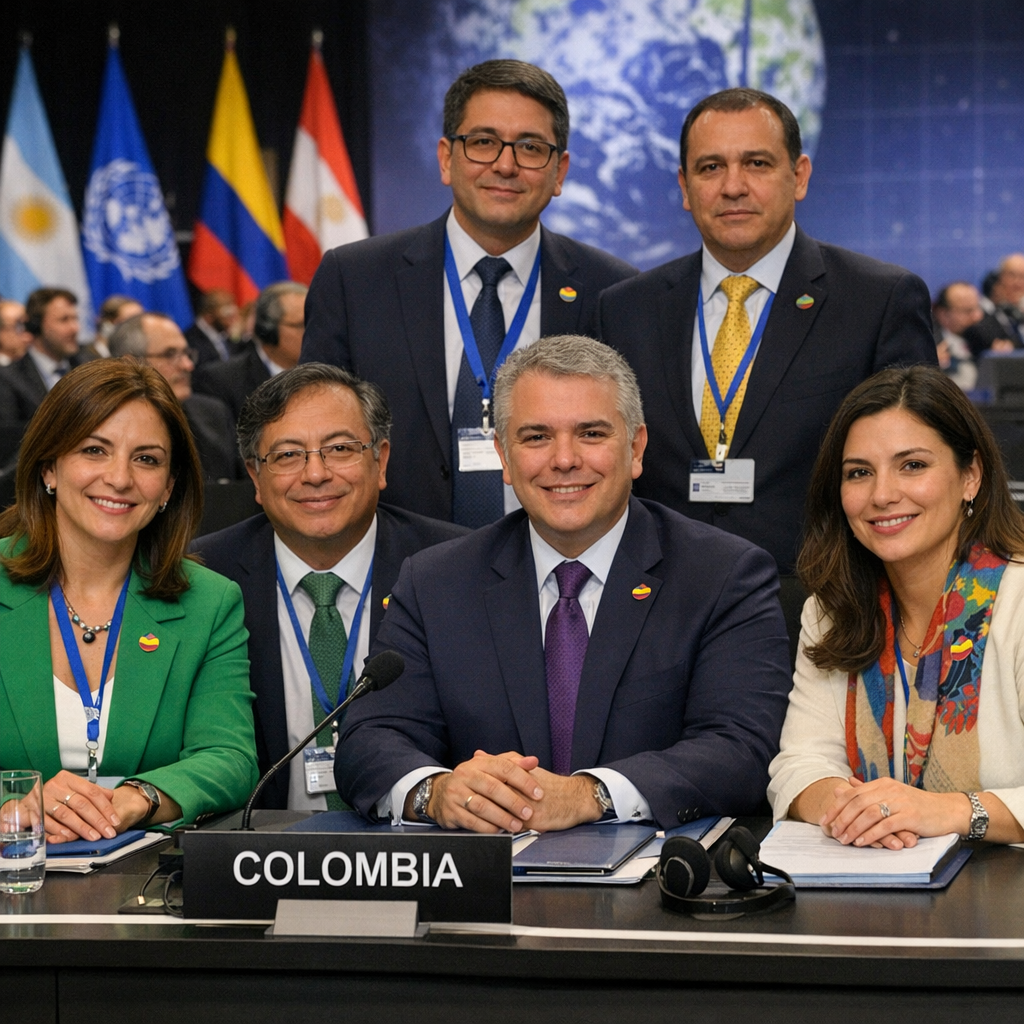
Colombia has emerged as a proactive participant in the global fight against climate change, demonstrating a commitment that extends beyond its borders. Despite contributing only 0.37% to global greenhouse gas emissions, the nation recognizes the urgency of addressing climate change due to its significant vulnerability to environmental shifts.
Hosting the International Conference on Fossil Fuel Phase-Out
In April 2026, Colombia co-hosted the first International Conference on Phasing Out Fossil Fuels in Santa Marta, alongside the Netherlands. This landmark event brought together 50 countries, including France, Canada, the United Kingdom, Brazil, and Norway, representing a substantial portion of global energy consumption and production. The conference aimed to develop actionable solutions for transitioning economies away from oil and gas dependence, reducing fossil fuel subsidies, and enhancing international cooperation. Notably, major emitters like China, the United States, and India were absent, highlighting the challenges in achieving global consensus on fossil fuel phase-out strategies.
Commitment to Nationally Determined Contributions (NDCs)
Colombia has set ambitious targets under its Nationally Determined Contributions (NDCs) to the Paris Agreement. The country aims to reduce greenhouse gas emissions by 51% below business-as-usual levels by 2030. This commitment is part of a broader strategy to achieve net-zero emissions by 2050, as outlined in the E2050 Strategy. To implement these targets, Colombia has established a robust system of climate change management plans across various government sectors, ensuring coordinated action towards these goals.
Advancing Renewable Energy and Economic Diversification
Recognizing the need to diversify its energy sources, Colombia has been promoting the development of wind, solar, and geothermal energy. The National Energy Plan 2020-2050 outlines this transition, aiming to reduce reliance on fossil fuels and enhance energy security. Additionally, the country is working to diversify its economy to mitigate the potential economic impacts of declining global demand for oil and coal, focusing on sustainable development and green growth opportunities.
Challenges and Opportunities
While Colombia’s proactive stance positions it as a leader in climate action, challenges remain. The country is highly vulnerable to climate-related extreme events such as floods, wildfires, and landslides. Moreover, as a major exporter of oil and coal, Colombia faces economic challenges as global demand for fossil fuels declines. However, these challenges also present opportunities. By leveraging its rich biodiversity and abundant renewable energy potential, Colombia can position itself as a leader in the global green energy transition, attracting investment and fostering sustainable economic growth.
Colombia’s active participation in global climate initiatives and its ambitious national policies underscore its commitment to addressing climate change. By hosting international conferences, setting substantial emission reduction targets, and promoting renewable energy, Colombia is contributing significantly to global efforts to combat climate change, while also paving the way for a sustainable and resilient future for its citizens.