

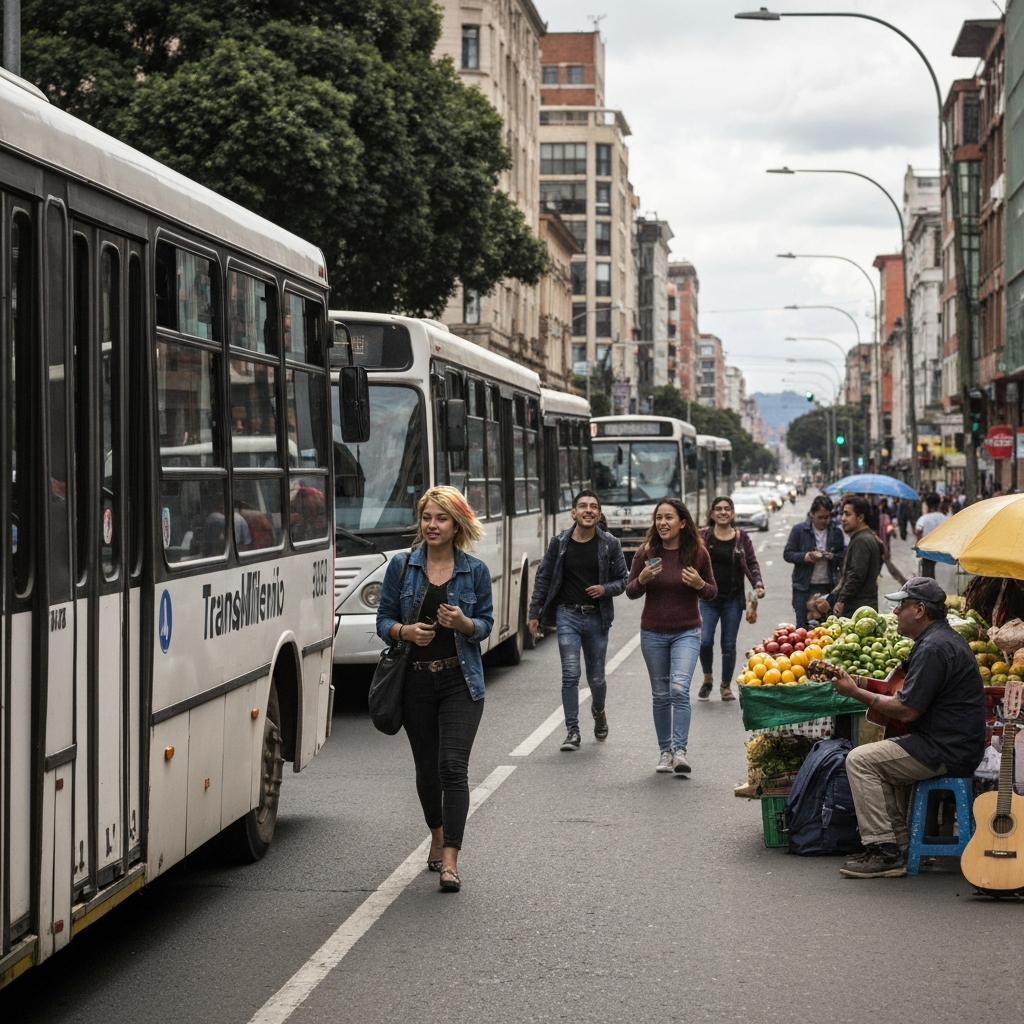
The construction of a new TransMilenio line along Carrera Séptima has become a focal point of discussion among Bogotá’s residents, revealing a spectrum of opinions on urban development and public transportation.
Support from Northern Neighborhoods
Residents from northern neighborhoods, particularly those in lower socioeconomic strata, have expressed strong support for the project. Community leaders from areas like El Codito and San Cristóbal emphasize the potential benefits, including significant reductions in commute times and improved access to the city’s core. They argue that the current transportation options necessitate lengthy and multiple transfers, making daily travel arduous. The new TransMilenio line promises to streamline their journeys, enhancing overall quality of life.
Concerns from Affluent Communities
Conversely, inhabitants of more affluent sectors between streets 99 and 121 have raised objections. Their concerns center on potential increases in congestion, environmental impacts, and alterations to the urban landscape. Questions have been posed regarding the project’s technical planning, timelines, and the transparency of information provided about its effects and advantages.
City Administration’s Stance
Mayor Carlos Fernando Galán has defended the continuation of the construction, emphasizing the project’s importance for the city’s transportation infrastructure. He acknowledges the diverse viewpoints but underscores the necessity of advancing initiatives that aim to benefit the broader population.
Historical Context
This debate echoes previous attempts to enhance mass transit along Carrera Séptima, a vital artery through which over 270,000 individuals travel daily. The current discourse reflects the ongoing challenge of balancing development with the varied interests of Bogotá’s diverse communities.