

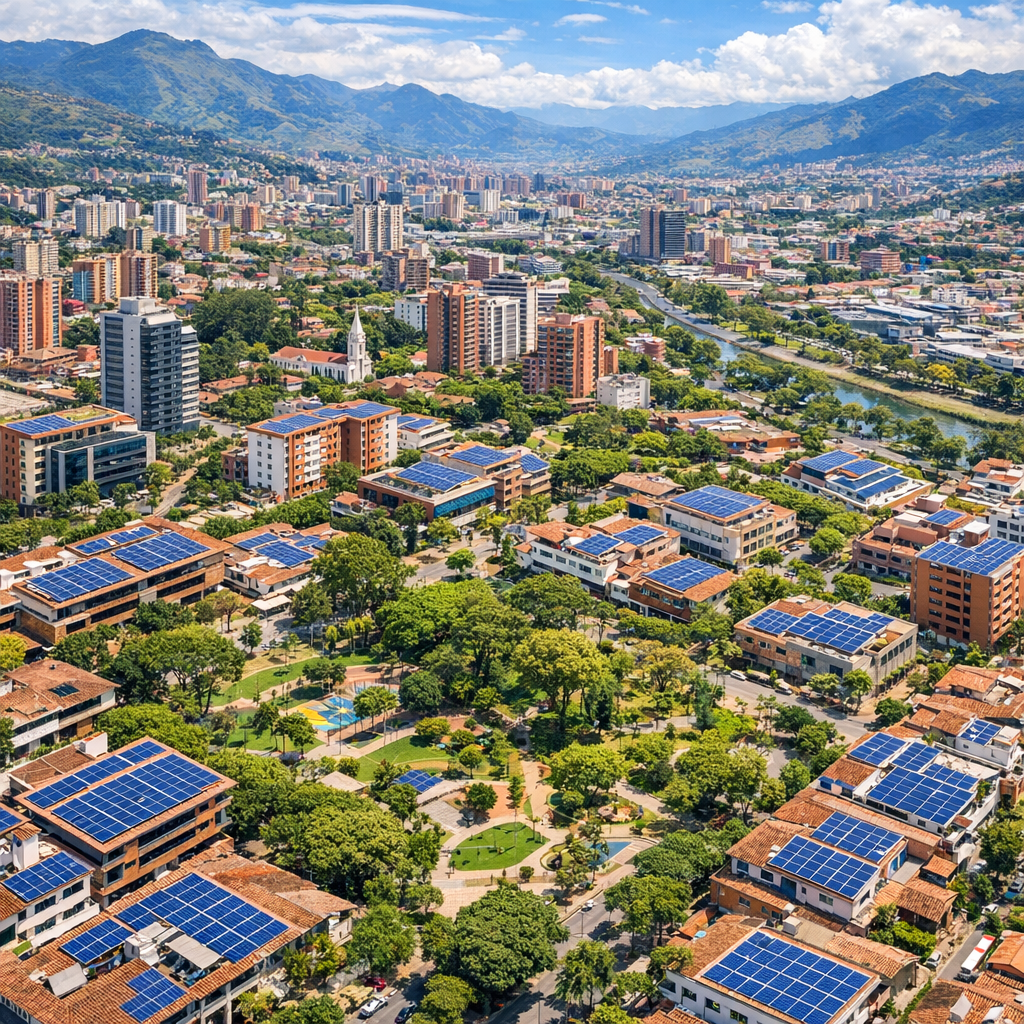
Colombia has emerged as a leader in global climate action, demonstrating a strong commitment to balancing economic growth with environmental sustainability. Despite contributing only 0.37% to global greenhouse gas emissions, the nation recognizes the urgency of addressing climate change due to its vulnerability to climate-related events such as floods, wildfires, and landslides.
Ambitious Climate Commitments
In September 2025, Colombia submitted its updated Nationally Determined Contribution (NDC), pledging to cap greenhouse gas emissions at 155–161 million tonnes CO₂ equivalent by 2035. This commitment aligns with the country’s goal of achieving carbon neutrality and climate resilience by 2050. Key mitigation strategies include expanding renewable energy, implementing stricter vehicle emission standards, curbing deforestation, and enhancing industrial efficiency.
Hosting the International Conference on Fossil Fuel Phase-Out
In April 2026, Colombia co-hosted the first International Conference on the Just Transition Away from Fossil Fuels in Santa Marta, alongside the Netherlands. The conference brought together 50 countries to discuss actionable solutions for transitioning economies dependent on oil and gas, reducing fossil fuel subsidies, and enhancing international cooperation. This initiative underscores Colombia’s proactive role in fostering global dialogue on phasing out fossil fuels.
Multilevel Governance and Local Initiatives
Colombia’s approach to climate action emphasizes multilevel governance, empowering cities to implement resilient, low-carbon projects. For instance, Cali has initiated a Public Buildings Solar Rooftops program, Valledupar is developing the Guatapurí River Eco-Park to mitigate flood risks, and Montería is transforming a former wastewater treatment area into a metropolitan botanical garden. These local initiatives contribute to national emission reduction goals while improving quality of life and protecting ecosystems.
Challenges and Opportunities
While Colombia’s climate ambitions are commendable, challenges remain. The country’s heavy reliance on hydropower makes its electricity system vulnerable to climate change impacts, such as reduced water availability during El Niño events. To address this, the NDC prioritizes the rapid expansion of renewable energy sources, including solar and wind. Additionally, Colombia is committed to halting new hydrocarbon exploration contracts and plans to publish a roadmap for exiting fossil fuels by 2029, ensuring a just transition for workers in the coal and oil sectors.
Colombia’s proactive stance in global climate initiatives serves as a model for other nations, demonstrating that economic development and environmental stewardship can go hand in hand.