

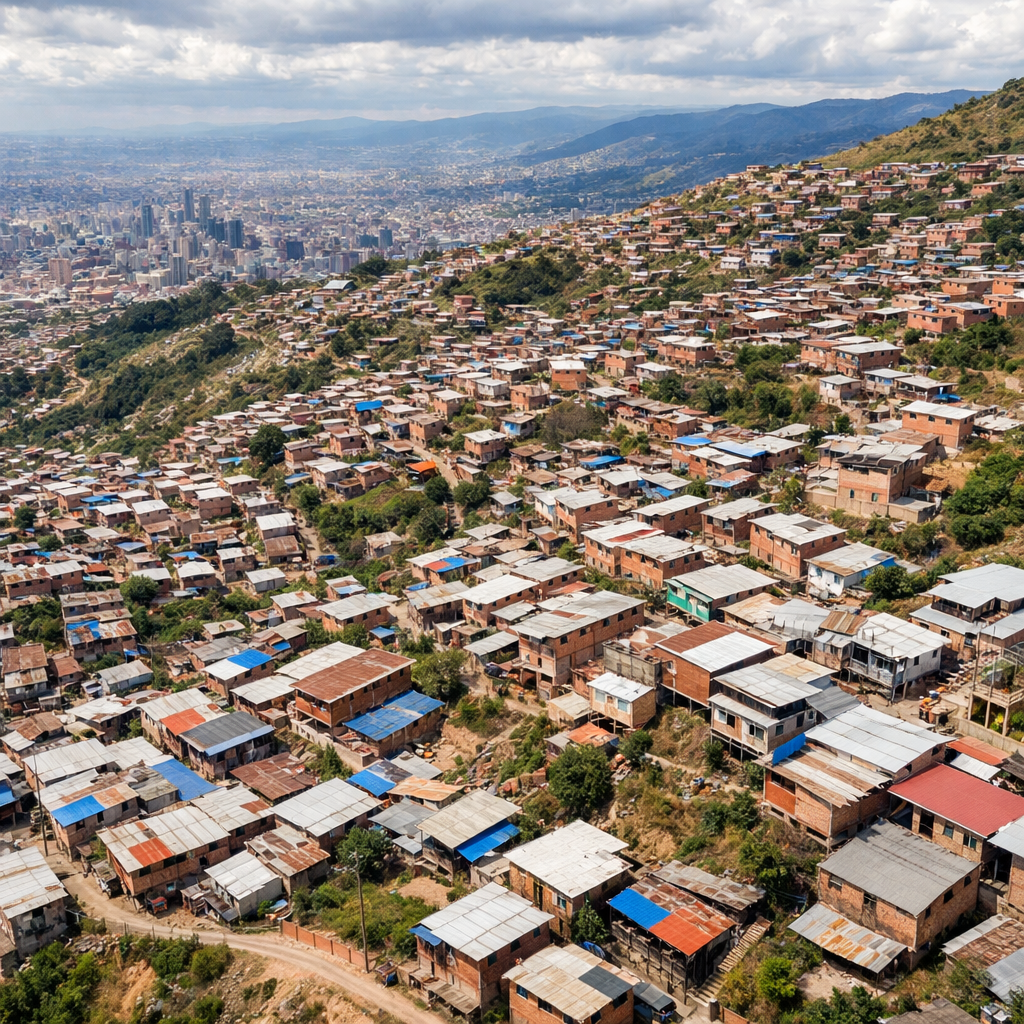
In recent years, Bogotá has witnessed a significant rise in informal housing, with approximately 35% of its households now residing in such conditions. This marks a notable increase from 22% in 2018, underscoring the city’s escalating urban challenges.
Understanding Informal Housing
Informal housing refers to residences constructed without official authorization, often lacking essential services and infrastructure. These settlements typically emerge due to rapid urbanization, economic constraints, and insufficient affordable housing options.
Implications for Residents
Residents of informal settlements frequently face numerous hardships, including limited access to clean water, sanitation, and electricity. Additionally, these areas are often more susceptible to environmental hazards and may lack adequate healthcare and educational facilities.
Citywide Impact
The proliferation of informal housing affects the entire city. It can strain public services, contribute to environmental degradation, and pose challenges for urban planning and development.
Addressing the Issue
To tackle this growing concern, Bogotá’s administration has initiated efforts to legalize certain informal neighborhoods, aiming to integrate them into the city’s formal infrastructure. This process involves providing essential services, improving living conditions, and granting residents legal ownership of their properties.
Community Involvement
Active participation from community members is crucial in this endeavor. Residents are encouraged to engage with local authorities, participate in planning processes, and advocate for their rights to ensure that solutions are both effective and equitable.
Looking Ahead
While the challenge of informal housing in Bogotá is substantial, collaborative efforts between the government, communities, and other stakeholders can pave the way for sustainable solutions. By addressing the root causes and implementing inclusive policies, the city can work towards providing safe and dignified housing for all its residents.